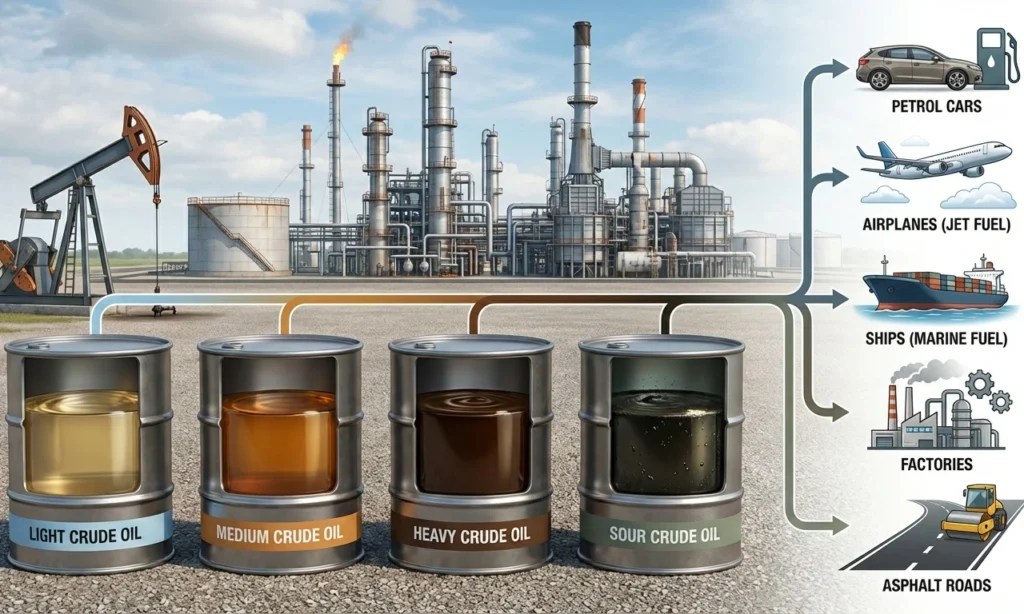
Different Types of Crude Oil and How They Are Used is an essential topic for understanding how the global energy system works. Crude oil plays a central role in modern life because it fuels transportation, supports industries, and provides raw materials for thousands of products. However, crude oil does not exist in a single form. Oil extracted from different regions varies in quality, composition, and usability. These differences determine how refineries process crude oil and which products they can produce most efficiently.
Understanding the different types of crude oil helps explain fuel prices, refining costs, and why certain countries prefer specific crude oil grades. This article explains crude oil classification, major types, and how each type is used across industries.
What Is Crude Oil?
Crude oil is a naturally occurring liquid found beneath the Earth’s surface. It forms over millions of years from organic matter subjected to heat and pressure. Crude oil contains hydrocarbons, along with small amounts of sulfur, nitrogen, oxygen, and metals.
Refineries process crude oil to produce petrol, diesel, jet fuel, lubricants, and petrochemicals. Because crude oil quality differs from one source to another, refineries must adjust their processes based on the type of crude oil they receive.
Classification of Different Types of Crude Oil
Experts classify different types of crude oil mainly based on density and sulfur content. These two factors directly affect refining complexity and product yield.
Types of Crude Oil Based on Density
Light Crude Oil and Its Uses
Light crude oil has a low density and flows easily at room temperature. It contains a high percentage of lighter hydrocarbons, which makes it highly valuable.
Uses of light crude oil include:
- Petrol (gasoline) production
- Diesel fuel manufacturing
- Jet fuel and aviation fuels
- Petrochemical feedstocks
Refineries prefer light crude oil because it requires less processing and produces more high-value fuels. Many advanced economies rely heavily on light crude oil to meet transportation fuel demand.
Medium Crude Oil and Its Uses
Medium crude oil has a density between light and heavy crude oil. It offers a balanced mix of lighter and heavier hydrocarbons.
Uses of medium crude oil include:
- Diesel and heating oil
- Petrol blending
- Marine fuels
- Industrial fuels
Refineries with flexible configurations often use medium crude oil because it supports a wide range of fuel products without extreme processing costs.
Heavy Crude Oil and Its Uses
Heavy crude oil has a high density and thick consistency. It contains more complex hydrocarbons and fewer light fractions.
Uses of heavy crude oil include:
- Fuel oil for power plants
- Marine bunker fuel
- Asphalt and bitumen
- Industrial boilers
Refining heavy crude oil requires advanced technology such as coking and hydrocracking. Despite higher processing costs, heavy crude oil remains important due to its large global reserves.
Extra-Heavy Crude Oil and Bitumen
Extra-heavy crude oil barely flows at normal temperatures. Oil sands and bitumen deposits fall into this category.
Uses of extra-heavy crude oil include:
- Road construction materials
- Synthetic crude oil after upgrading
- Industrial fuel applications
Producers often upgrade extra-heavy crude oil before sending it to refineries. This process increases cost but makes the oil usable for fuel production.
Types of Crude Oil Based on Sulfur Content
Sweet Crude Oil and Its Uses
Sweet crude oil contains low sulfur content, usually less than 0.5%. Low sulfur levels make refining easier and reduce environmental impact.
Uses of sweet crude oil include:
- Petrol and diesel with low emissions
- Jet fuel production
- High-quality petrochemicals
Many countries prefer sweet crude oil because it helps meet strict environmental regulations.
Sour Crude Oil and Its Uses
Sour crude oil contains higher sulfur levels. Sulfur must be removed during refining to meet fuel standards.
Uses of sour crude oil include:
- Diesel and fuel oil after treatment
- Power generation fuels
- Industrial energy applications
Although sour crude oil costs less in the market, refining it requires advanced desulfurization equipment.
Major Global Benchmark Crude Oil Types
Brent Crude Oil
Brent crude oil serves as a global pricing benchmark. It falls into the light and sweet category.
Common uses of Brent crude oil include:
- Petrol and diesel for European markets
- Jet fuel production
- International fuel trading
West Texas Intermediate (WTI)
WTI represents high-quality light sweet crude oil from the United States.
Uses of WTI crude oil include:
- High-octane petrol
- Ultra-low sulfur diesel
- Petrochemical products
Dubai and Oman Crude Oil
Dubai and Oman crude oils act as benchmarks for Middle Eastern exports. These oils are medium and sour.
Uses include:
- Asian fuel markets
- Marine fuels
- Power generation
Unconventional Types of Crude Oil and Their Uses
Shale Oil
Shale oil comes from shale formations through advanced drilling techniques.
Uses of shale oil include:
- Petrol and diesel production
- Chemical manufacturing
- Export fuel supplies
Synthetic Crude Oil
Producers create synthetic crude oil by upgrading heavy or extra-heavy crude.
Uses include:
- Standard refinery processing
- Transportation fuels
- Industrial energy
Why Different Types of Crude Oil Matter
Different types of crude oil influence:
- Fuel prices
- Refinery design
- Environmental impact
- Global energy trade
Light and sweet crude oil produces cleaner fuels at lower costs, while heavy and sour crude oil supports infrastructure, shipping, and power generation.
Conclusion
Understanding Different Types of Crude Oil and How They Are Used provides valuable insight into global energy production and fuel economics. Each crude oil type serves a specific purpose, from powering vehicles to building roads and generating electricity. Light and sweet crude oil supports transportation, while heavy and sour crude oil strengthens industrial and infrastructure development.
As energy demand grows, efficient use of different crude oil types will remain critical. A clear understanding of Different Types of Crude Oil and How They Are Used helps businesses, policymakers, and consumers make informed decisions in an evolving energy landscape.
“Stay In Touch With Us For More Latest News & Updates. Follow Us On Twitter and Facebook To Stay Aware”