Introduction
Ever feel like your mind is full of ideas, tasks, and plans—but nothing is actually clear?
You’re not alone.
Most people struggle not because they lack ideas, but because they don’t know how to organize ideas effectively and turn them into actionable steps.
If you’ve ever felt overwhelmed managing multiple projects, this guide will help you build a smarter, more structured productivity workflow.
Why Most People Struggle to Organize Ideas
We live in a world of constant input—emails, meetings, notes, and deadlines.
The real challenge isn’t generating ideas. It’s managing them.
Without proper idea management:
- Tasks become scattered
- Priorities get lost
- Execution slows down
If you’ve also faced issues staying focused, improving your time management strategies can significantly support better planning.
The Hidden Cost of Disorganized Thinking
Disorganized thinking doesn’t just affect your work—it impacts your results.
You may experience:
- Reduced productivity
- Poor decision-making
- Increased stress
Many professionals try random tools without understanding proper project organization, which leads to even more confusion.
What is Visual Planning?
Visual planning is a method of organizing ideas, tasks, and workflows using diagrams or structured layouts instead of plain text. It improves clarity, enhances decision-making, and helps execute plans more efficiently.
How to Organize Ideas Effectively
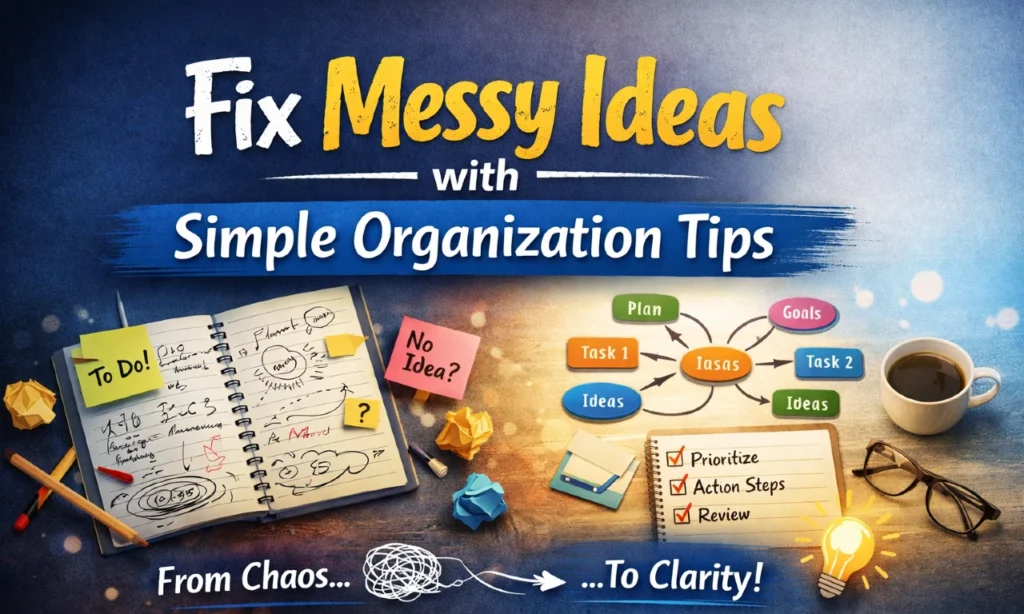
- Capture all ideas in one place
- Group related concepts together
- Prioritize based on importance
- Convert ideas into actionable steps
- Review and refine regularly
This structured approach forms the foundation of a strong visual project planning system.
If you’re exploring ways to improve idea generation, learning effective brainstorming techniques can also help refine this process.
Why Visual Thinking Improves Productivity
Your brain processes visuals significantly faster than text.
That’s why visual thinking helps you:
- Understand complex ideas quickly
- Identify patterns and connections
- Improve execution speed
This is especially useful when managing multiple workflows or collaborating with teams.
Common Mistakes to Avoid
Even with the right intention, people often:
- Overcomplicate their systems
- Use too many disconnected tools
- Fail to maintain consistency
Instead of adding complexity, focus on simplifying your productivity workflow.
A Smarter Way to Turn Ideas into Action
At a certain level, manual methods stop working—especially when handling complex tasks or large-scale projects.
This is where structured visual tools become essential.

Solutions like MindManager help transform scattered ideas into clear, actionable plans through visual mapping and workflow structuring.
For example:
- mindmanager software supports structured idea organization
- mindmanager online and mindmanager cloud enable access from anywhere
- mindmanager for mac and mindmanager for windows provide platform flexibility
- mindmanager for students helps in academic planning
Additionally, integrations like mindmanager outlook and tools within the corel mindmanager ecosystem enhance collaboration and productivity.
For those comparing tools, factors like mindmanager pricing and scalability matter depending on your workflow needs. Even legacy versions like mindmanager x5 pro contributed to shaping modern visual planning solutions.
How Consistency Improves Idea Organization
One of the most overlooked factors in effective idea management is consistency. Even the best system will fail if it’s not used regularly. Organizing your ideas isn’t a one-time activity—it’s an ongoing habit that evolves with your workflow.
Set aside a few minutes each day or week to review, update, and refine your ideas. This helps you stay aligned with your priorities and prevents information overload from building up again. Over time, this habit strengthens your ability to think clearly and make faster decisions.
Consistency also improves your overall productivity workflow by creating structure and reducing mental clutter. Instead of reacting to chaos, you start operating with clarity and control—making it easier to manage both small tasks and complex projects efficiently.
Final Thoughts
Clarity doesn’t come from doing more work—it comes from structuring your ideas the right way.
When you:
- Organize ideas effectively
- Use visual planning methods
- Build a consistent workflow
You reduce stress and improve results.
The real difference between chaos and clarity is not effort—it’s how you manage your thinking.