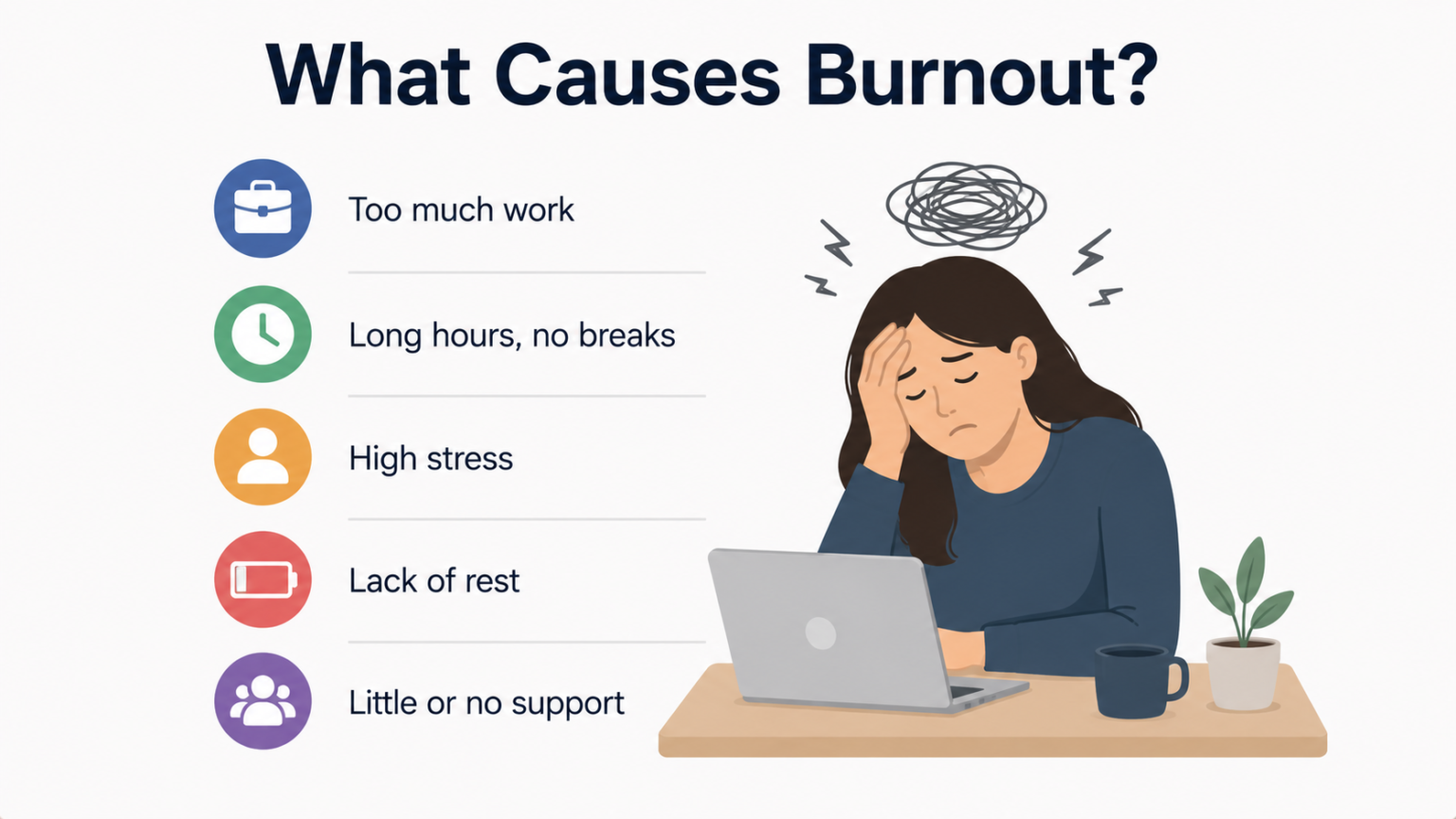
Burnout usually doesn’t develop because of one bad day or a stressful week. Instead, it results from long-term exposure to chronic stress without enough time, support, or resources to recover.
Although workplace demands are one of the most common causes, burnout can also affect students, caregivers, parents, entrepreneurs, and anyone facing ongoing emotional or physical pressure.
Causes of Burnout
1. Work Overload
Having too many responsibilities with too little time is one of the leading causes of workplace burnout — unrealistic deadlines, long working hours, constant overtime, high workloads, and lack of breaks. When your brain remains in “work mode” for extended periods, recovery becomes increasingly difficult.
2. Lack of Control
People are more likely to experience burnout when they feel they have little control over their work — limited decision-making authority, micromanagement, unclear expectations, frequent changes in priorities, and lack of flexibility. Feeling powerless over your daily responsibilities often increases emotional exhaustion.
3. Poor Work-Life Balance
When work consistently interferes with family time, hobbies, exercise, or sleep, stress can accumulate quickly. Common signs include checking emails late at night, working during weekends, skipping vacations, rarely taking breaks, and feeling guilty when resting.
4. Lack of Recognition
Everyone wants to feel that their efforts matter. Working hard without appreciation, constructive feedback, or opportunities for growth may contribute to feelings of frustration and reduced motivation.
5. Emotionally Demanding Jobs
Some professions involve continuous emotional pressure — healthcare workers, teachers, social workers, customer service representatives, emergency responders, and caregivers. Providing constant emotional support to others can gradually drain personal emotional resources.
6. Toxic Workplace Culture
A stressful work environment can significantly increase the risk of burnout — bullying, workplace harassment, poor communication, lack of support from managers, constant conflict, and unrealistic expectations. Even highly motivated employees can struggle in unhealthy workplace environments.
7. Perfectionism
Sometimes burnout isn’t caused only by external pressure. People with perfectionist tendencies often set unrealistically high standards, struggle to delegate tasks, fear making mistakes, and constantly criticize themselves. Over time, these habits can create chronic stress.
8. Lack of Social Support
Supportive relationships help people cope with stress. Without encouragement from friends, family, coworkers, or supervisors, stressful situations often feel even more overwhelming.
Burnout Symptoms At Work
Because the World Health Organization defines burnout as an occupational phenomenon, many people first notice symptoms in the workplace, including:
- Constant exhaustion before the workday begins
- Declining productivity
- Missing deadlines
- Reduced creativity
- Difficulty concentrating during meetings
- Increased absenteeism
- Feeling detached from coworkers
- Irritability with clients or colleagues
- Loss of enthusiasm for work
- Frequently thinking about quitting
Burnout affects both employee well-being and organizational performance, making early recognition important for individuals and employers alike.
Burnout vs Stress
Many people use the terms stress and burnout interchangeably, but they are not the same.
| Stress | Burnout |
|---|---|
| Usually temporary | Usually develops over months |
| Feeling overwhelmed | Feeling emotionally empty |
| High emotions | Emotional numbness |
| Can improve after rest | Often continues despite rest |
| High energy but under pressure | Low energy and lack of motivation |
| Hope that things will improve | Feeling hopeless or detached |
Stress often feels like: “I have too much to do.” Burnout often feels like: “I don’t even care anymore.”
Stress typically involves too much, while burnout often feels like nothing left to give.
Burnout vs Depression
Burnout and depression share several symptoms, making them easy to confuse. Both may involve fatigue, sleep problems, poor concentration, reduced motivation, and feelings of hopelessness. However, they are not the same condition.
| Burnout | Depression |
|---|---|
| Usually linked to ongoing stress, especially work | Can occur with or without a specific trigger |
| Symptoms often improve when stress is reduced | Symptoms affect nearly every area of life |
| Primarily related to exhaustion and detachment | Persistent sadness or loss of interest is common |
| May improve with lifestyle changes | Often requires professional treatment |
Some people experience both burnout and depression at the same time. If symptoms extend beyond work, persist for weeks, or include thoughts of self-harm, it’s important to seek evaluation from a qualified mental health professional.
Stages of Burnout
Burnout usually develops gradually rather than suddenly. While different researchers describe the process differently, the progression often looks like this:
Stage 1: High Motivation
At first, you feel excited and committed. You willingly work longer hours and take on additional responsibilities.
Stage 2: Increasing Stress
Pressure begins to build. You may notice difficulty sleeping, mild anxiety, reduced patience, and occasional exhaustion.
Stage 3: Chronic Stress
Stress becomes a daily experience — constant fatigue, irritability, reduced productivity, frequent headaches, and poor concentration.
Stage 4: Burnout
At this stage, symptoms significantly affect work and daily life — emotional exhaustion, cynicism, loss of motivation, physical fatigue, mental fog, and feeling disconnected from others.
Stage 5: Habitual Burnout
Without intervention, burnout may become persistent. Daily functioning becomes increasingly difficult, and emotional or physical health may continue to decline. Professional support is often beneficial during this stage.
How Do You Know If You Have Burnout?
There isn’t a single medical test that diagnoses burnout. Healthcare professionals usually evaluate your symptoms, work environment, stress levels, mental health history, and physical health.
You may be experiencing burnout if you consistently notice several of the following:
- You feel exhausted most days
- Rest no longer restores your energy
- Work feels emotionally draining
- You struggle to concentrate
- You’re becoming more cynical or detached
- Your productivity has declined
- You dread starting the workday
- Physical symptoms like headaches or muscle tension have become frequent
If these symptoms persist for several weeks and interfere with daily life, consider speaking with a healthcare provider or licensed mental health professional.
Burnout Symptoms Checklist
Use this checklist as a self-reflection tool. It is not a medical diagnosis.
Emotional Symptoms
- Feeling emotionally exhausted
- Loss of motivation
- Increased irritability
- Feeling detached from others
- Hopelessness
- Emotional numbness
Mental Symptoms
- Brain fog
- Difficulty concentrating
- Forgetfulness
- Poor decision-making
- Negative thinking
- Reduced creativity
Physical Symptoms
- Persistent fatigue
- Headaches
- Muscle tension
- Poor sleep
- Digestive discomfort
- Frequent illness
Workplace Symptoms
- Declining productivity
- Avoiding responsibilities
- Feeling disconnected from work
- Dreading Mondays
- Considering quitting frequently
If you checked several of these symptoms and they’ve continued for weeks despite getting rest, it may be time to evaluate your stress levels and seek support.
So now what? Can you actually recover from this?
Understanding the causes and stages is useful, but the real question most people want answered is: how do I get out of this? The good news is that burnout recovery is possible, and it doesn’t always require quitting your job or overhauling your whole life. In the final blog of this series, we cover evidence-informed recovery strategies, realistic timelines, prevention tips, and answers to the most common burnout questions.
👉 Read Part 3: How to Recover From Burnout: Tips, Prevention & FAQs