Introduction
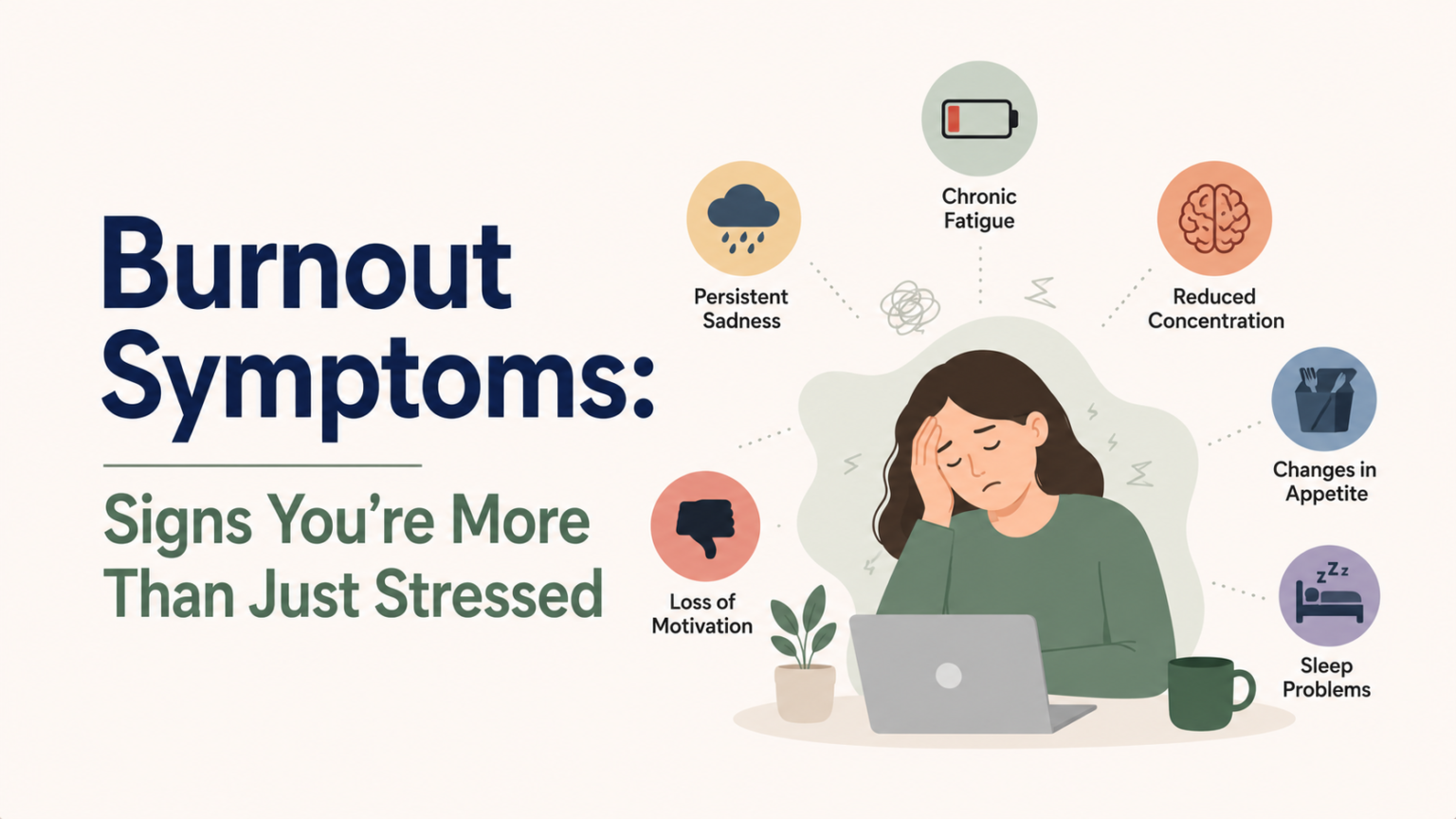
Have you been feeling exhausted no matter how much you sleep? Has work become emotionally draining, leaving you unmotivated and detached from responsibilities you once enjoyed? If these feelings have persisted for weeks or even months, you may be experiencing burnout symptoms rather than ordinary stress.
Burnout has become increasingly common among professionals, students, caregivers, healthcare workers, and even parents. While many people casually say they’re “burned out,” true burnout is a serious condition linked to prolonged, unmanaged stress that affects emotional well-being, physical health, and daily functioning.
The World Health Organization (WHO) recognizes burnout as an occupational phenomenon, describing it as a syndrome resulting from chronic workplace stress that has not been successfully managed. According to WHO, burnout is characterized by three main dimensions:
- Feeling depleted or exhausted
- Increased mental distance or cynicism toward work
- Reduced professional effectiveness
Although WHO classifies burnout specifically in the workplace, experts acknowledge that similar patterns of chronic stress and emotional exhaustion can also occur in caregiving, parenting, academic settings, and other demanding life situations.
What Is Burnout?
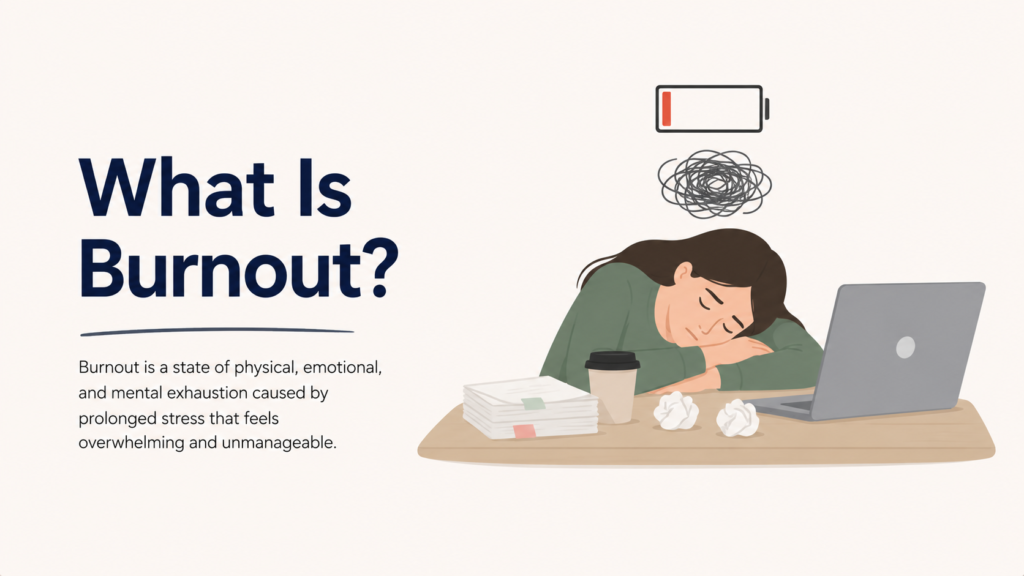
Burnout is a state of physical, emotional, and mental exhaustion caused by prolonged exposure to chronic stress, particularly when a person feels overwhelmed, emotionally drained, and unable to meet ongoing demands.
Unlike short-term stress, burnout develops gradually. Many people don’t notice it until their energy, motivation, and performance have significantly declined.
Researchers generally describe burnout using three core components:
Emotional Exhaustion
You feel emotionally depleted and have little energy left to deal with work or daily responsibilities.
Depersonalization or Cynicism
You become detached from your work, clients, coworkers, or responsibilities. You may feel emotionally numb or increasingly negative.
Reduced Personal Accomplishment
Even when you complete tasks successfully, you feel ineffective or believe your efforts no longer matter.
These characteristics were originally described through the Maslach Burnout Inventory (MBI), one of the most widely used scientific tools for assessing occupational burnout.
What Are the First Signs of Burnout?
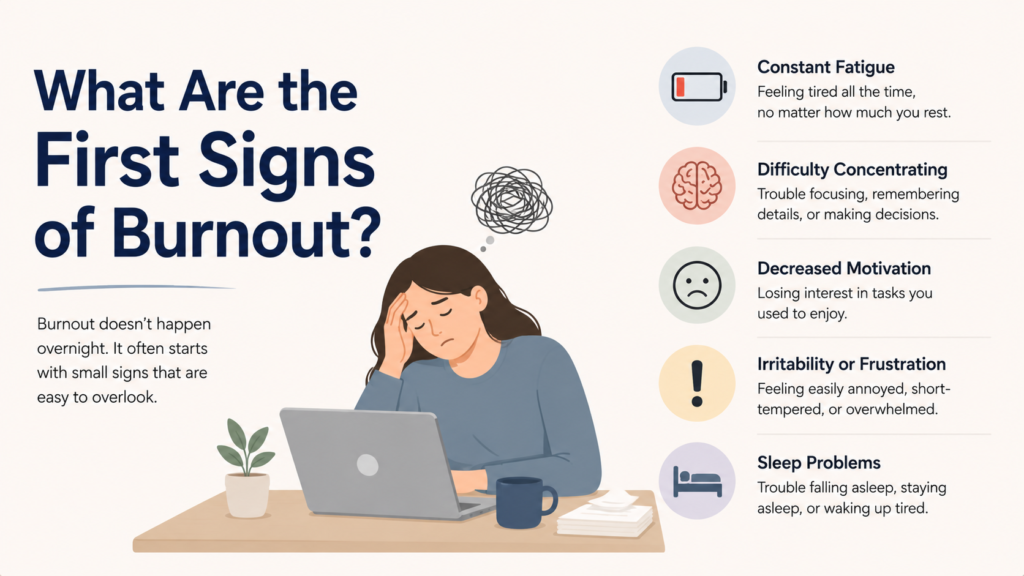
Burnout rarely appears overnight. It usually develops slowly, making the early warning signs easy to overlook.
Some of the earliest burnout warning signs include:
- Feeling tired even after getting enough sleep
- Dreading going to work each morning
- Becoming easily irritated over minor issues
- Losing motivation for tasks you once enjoyed
- Difficulty concentrating
- Reduced productivity
- Frequent headaches
- Trouble sleeping
- Feeling emotionally detached
- Constantly thinking about quitting your job
Recognizing these symptoms early gives you the best chance to prevent more serious emotional and physical consequences.
Emotional Burnout Symptoms
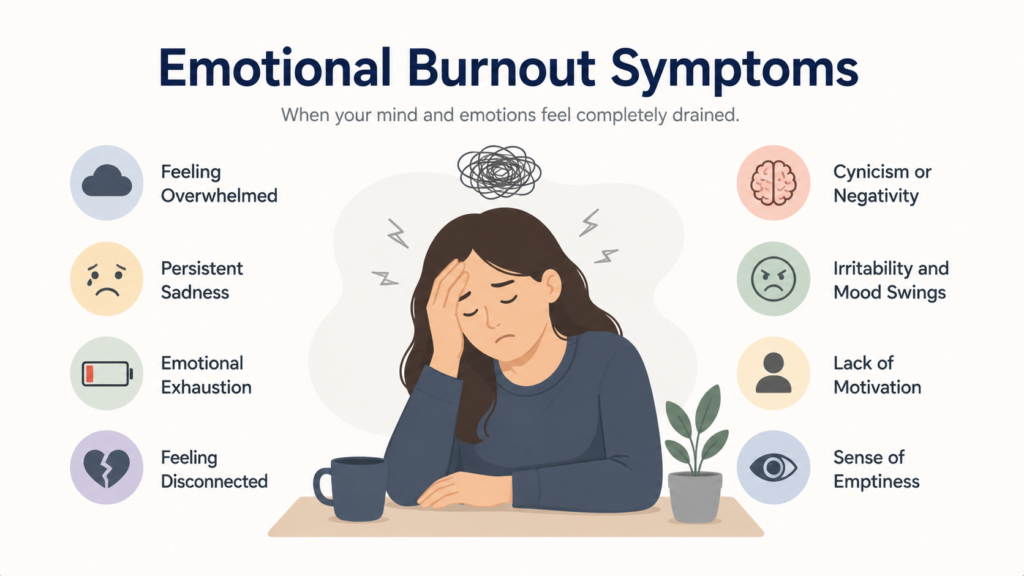
One of the most noticeable aspects of burnout is emotional exhaustion. People experiencing emotional burnout often report feeling like they have “nothing left to give.”
Feeling Emotionally Drained
You may wake up already feeling exhausted before your day even begins. Instead of recovering overnight, every new day feels like another challenge.
Increased Irritability
Small inconveniences suddenly feel overwhelming. You may become impatient with coworkers, family members, or customers even though you normally wouldn’t react this way.
Loss of Motivation
Tasks that once felt meaningful begin to seem pointless. You stop looking forward to projects and may simply try to “get through the day.”
Feeling Hopeless
Many individuals begin believing that nothing they do will improve their situation. This sense of helplessness often contributes to worsening burnout.
Emotional Numbness
Instead of feeling overwhelmed all the time, some people stop feeling much of anything. They become emotionally detached from both work and personal relationships.
Increased Anxiety
Burnout can increase feelings of nervousness and constant worry. People may feel anxious before meetings, work shifts, or even checking emails.
Reduced Satisfaction
Even major accomplishments fail to provide happiness. You may receive praise or complete an important project but feel little sense of achievement.
Mental Burnout Symptoms
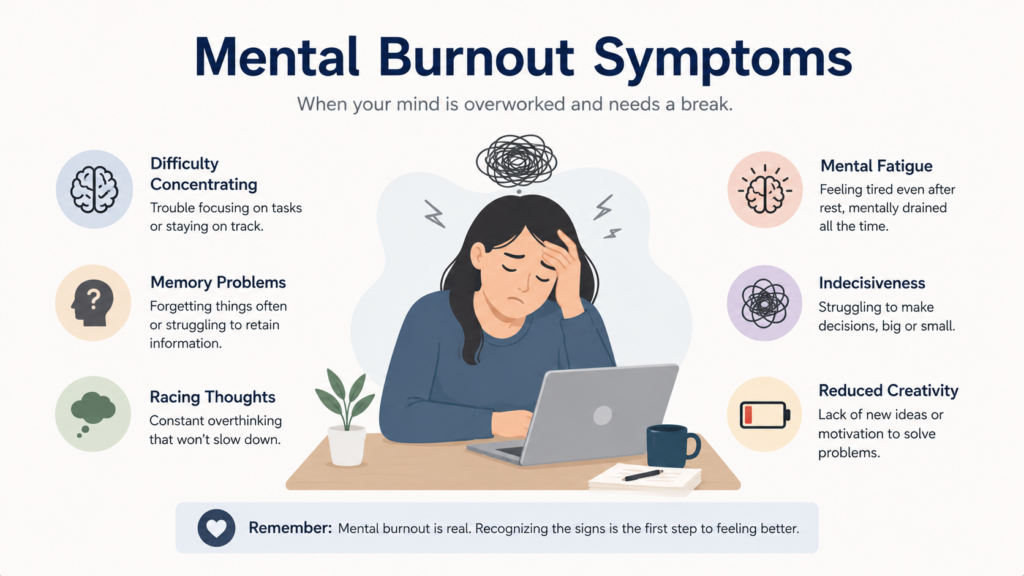
Burnout doesn’t only affect emotions. It also changes how the brain processes information, attention, and decision-making.
Brain Fog
Many people describe burnout as feeling mentally “cloudy.” Simple tasks suddenly require much more effort.
Difficulty Concentrating
Reading reports, writing emails, or following conversations becomes harder than usual. You may frequently lose track of what you’re doing.
Poor Memory
Forgetfulness becomes increasingly common, including forgetting appointments, missing deadlines, misplacing everyday items, and re-reading the same paragraph multiple times.
Constant Mental Fatigue
Unlike normal tiredness, mental fatigue doesn’t disappear after a night’s sleep. Your brain feels exhausted throughout the day.
Indecisiveness
Making even small decisions becomes surprisingly difficult — from what to eat to which email to answer first.
Negative Thinking
Burnout often leads to persistent negative thought patterns. You may begin doubting your abilities, expecting failure, or assuming nothing will improve.
Reduced Creativity
Creative thinking becomes more difficult. Many professionals notice they struggle to solve problems or generate new ideas compared to before burnout.
Physical Symptoms of Burnout
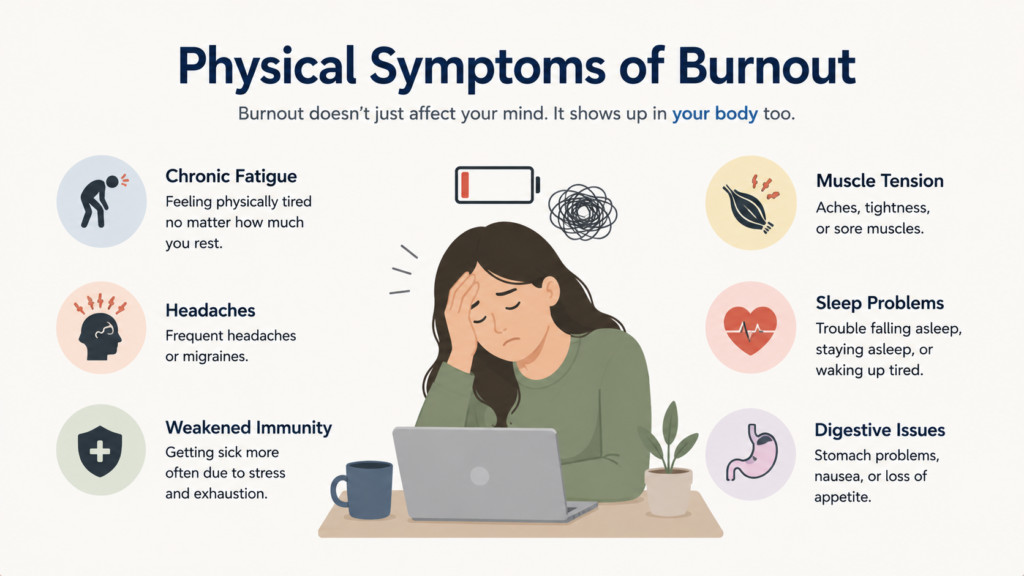
Burnout isn’t “just in your head.” Chronic stress can affect nearly every system in the body.
Persistent Fatigue
Ongoing exhaustion that doesn’t improve with rest. Even weekends or vacations may provide only temporary relief.
Frequent Headaches
Stress-related muscle tension can contribute to recurring headaches or migraines.
Muscle Pain
Neck pain, shoulder tension, back pain, and jaw tightness are common because the body’s stress response stays activated.
Sleep Problems
Difficulty falling asleep, waking up during the night, early morning awakening, and feeling unrefreshed after sleeping.
Digestive Issues
Stomach discomfort, nausea, indigestion, changes in appetite, and irritable bowel symptoms in some individuals.
Increased Illness
Chronic stress may weaken immune function over time, leading to more frequent colds and longer recovery from illness.
Heart Palpitations
Racing heartbeat, chest tightness, and rapid breathing can overlap with anxiety and should always be evaluated by a healthcare professional if severe or sudden.
Changes in Appetite
Some people lose their appetite completely, while others eat more than usual in response to stress.
Low Energy Throughout the Day
Instead of normal fluctuations in energy, people with burnout often feel physically exhausted from morning until bedtime.
Key Takeaways
By this stage, burnout often affects three major areas of life:
- Emotional: exhaustion, irritability, hopelessness, emotional numbness
- Mental: brain fog, poor concentration, forgetfulness, negative thinking
- Physical: fatigue, headaches, sleep problems, muscle tension, digestive issues
Recognizing these burnout symptoms early is the first step toward recovery.
But what’s actually causing all of this?
Symptoms are only half the story. Knowing what pushes someone into burnout — and how to tell it apart from ordinary stress or depression — is just as important for figuring out what to do next. In the next blog, we break down the real causes of burnout, the 5 stages it moves through, and a self-check symptoms checklist you can use today.
👉 Read Part 2: What Causes Burnout? Stages, Checklist & Burnout vs Stress vs Depression